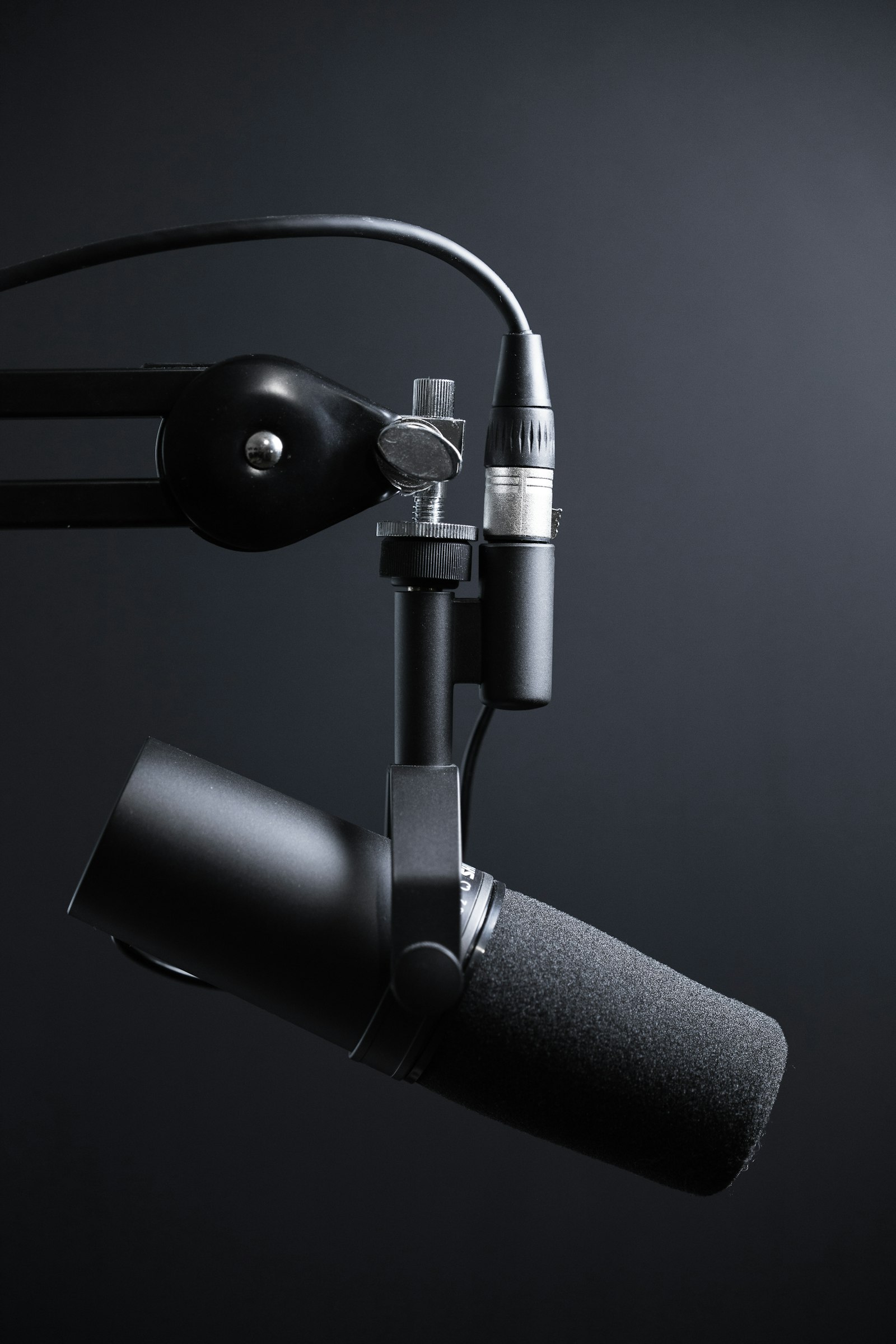
The ability of artificial intelligence to understand spoken human language, transcribe audio accurately in real time, and synthesize hyper-realistic synthetic voices has revolutionized modern communication, accessibility software, and customer service automation. Automatic Speech Recognition (ASR) and neural text-to-speech (TTS) engines have evolved from rigid, rule-based phonetic matching systems into end-to-end deep neural networks capable of capturing subtle emotional inflections, regional accents, and acoustic nuances. This comprehensive guide explores the complex acoustic pipelines and deep learning architectures driving modern voice intelligence. The conversion of acoustic sound waves into digital text begins with digital signal processing. Sound waves captured by microphones are sampled, converted into digital audio streams, and transformed into frequency-time visual representations known as spectrograms using Fourier transforms. These spectrograms serve as the raw input matrices for acoustic and language models. Modern architectures—such as OpenAI's Whisper model—utilize massive encoder-decoder Transformer networks trained on hundreds of thousands of hours of multilingual audio data. The encoder processes audio spectrogram features into high-dimensional hidden states, while the decoder autoregressively generates precise text token sequences. Conversely, neural audio synthesis solves the inverse problem: translating text prompts into natural, emotionally expressive human speech waveforms. Modern TTS systems utilize advanced flow-matching, diffusion, and autoregressive models to generate raw audio spectra directly from text tokens, bypassing robotic artifacts. These synthesized waveforms are then rendered through neural vocoders like HiFi-GAN, producing crystal-clear audio outputs. This article analyzes the acoustic mechanics, latency optimizations, and real-world applications shaping the future of voice-activated computing.
Why this matters now
Technology rarely arrives as a single breakthrough. It emerges from a chain of research decisions, infrastructure investments, and practical constraints. The ability of artificial intelligence to understand spoken human language, transcribe audio accurately in real time, and synthesize hyper-realistic synthetic voices has revolutionized modern communication, accessibility software, and customer service automation. Automatic Speech Recognition (ASR) and neural text-to-speech (TTS) engines have evolved from rigid, rule-based phonetic matching systems into end-to-end deep neural networks capable of capturing subtle emotional inflections, regional accents, and acoustic nuances. This comprehensive guide explores the complex acoustic pipelines and deep learning architectures driving modern voice intelligence. The conversion of acoustic sound waves into digital text begins with digital signal processing. Sound waves captured by microphones are sampled, converted into digital audio streams, and transformed into frequency-time visual representations known as spectrograms using Fourier transforms. These spectrograms serve as the raw input matrices for acoustic and language models. Modern architectures—such as OpenAI's Whisper model—utilize massive encoder-decoder Transformer networks trained on hundreds of thousands of hours of multilingual audio data. The encoder processes audio spectrogram features into high-dimensional hidden states, while the decoder autoregressively generates precise text token sequences. Conversely, neural audio synthesis solves the inverse problem: translating text prompts into natural, emotionally expressive human speech waveforms. Modern TTS systems utilize advanced flow-matching, diffusion, and autoregressive models to generate raw audio spectra directly from text tokens, bypassing robotic artifacts. These synthesized waveforms are then rendered through neural vocoders like HiFi-GAN, producing crystal-clear audio outputs. This article analyzes the acoustic mechanics, latency optimizations, and real-world applications shaping the future of voice-activated computing. This context matters because the most useful way to evaluate a new system is not to ask whether it is impressive in isolation, but whether it changes what people can reliably do, at what cost, and with which risks. For researchers and builders, that means separating the demonstration from the durable capability.
A responsible reading of inside ai voice recognition: acoustic modeling, speech-to-text, and neural audio synthesis also requires attention to who benefits and who carries the cost. Teams should document assumptions, monitor drift, and give affected people a meaningful way to challenge automated decisions. These are not secondary considerations: they determine whether a promising technical idea becomes dependable infrastructure.
The architecture behind the promise
The ability of artificial intelligence to understand spoken human language, transcribe audio accurately in real time, and synthesize hyper-realistic synthetic voices has revolutionized modern communication, accessibility software, and customer service automation. Automatic Speech Recognition (ASR) and neural text-to-speech (TTS) engines have evolved from rigid, rule-based phonetic matching systems into end-to-end deep neural networks capable of capturing subtle emotional inflections, regional accents, and acoustic nuances. This comprehensive guide explores the complex acoustic pipelines and deep learning architectures driving modern voice intelligence. The conversion of acoustic sound waves into digital text begins with digital signal processing. Sound waves captured by microphones are sampled, converted into digital audio streams, and transformed into frequency-time visual representations known as spectrograms using Fourier transforms. These spectrograms serve as the raw input matrices for acoustic and language models. Modern architectures—such as OpenAI's Whisper model—utilize massive encoder-decoder Transformer networks trained on hundreds of thousands of hours of multilingual audio data. The encoder processes audio spectrogram features into high-dimensional hidden states, while the decoder autoregressively generates precise text token sequences. Conversely, neural audio synthesis solves the inverse problem: translating text prompts into natural, emotionally expressive human speech waveforms. Modern TTS systems utilize advanced flow-matching, diffusion, and autoregressive models to generate raw audio spectra directly from text tokens, bypassing robotic artifacts. These synthesized waveforms are then rendered through neural vocoders like HiFi-GAN, producing crystal-clear audio outputs. This article analyzes the acoustic mechanics, latency optimizations, and real-world applications shaping the future of voice-activated computing. At implementation level, the important trade-offs are usually found at the boundaries: data quality, latency, energy use, interfaces, and the evaluation methods used to measure success. A model or device can score highly in a controlled benchmark while behaving differently in a noisy production environment. Robust systems therefore combine specialized components, transparent instrumentation, and feedback loops that make errors visible. This is also where open standards and reproducible research create leverage: they allow independent teams to verify claims and improve the baseline rather than treating every product as a black box.
A responsible reading of inside ai voice recognition: acoustic modeling, speech-to-text, and neural audio synthesis also requires attention to who benefits and who carries the cost. Teams should document assumptions, monitor drift, and give affected people a meaningful way to challenge automated decisions. These are not secondary considerations: they determine whether a promising technical idea becomes dependable infrastructure.
What the evidence suggests
The current evidence points to a more nuanced picture than the headlines imply. Capabilities are advancing quickly, but performance remains uneven across languages, edge cases, operating conditions, and user populations. The strongest deployments define a narrow job, establish a human-review path, and measure outcomes over time. Independent audits, peer-reviewed findings, and technical documentation are more valuable than a single launch demonstration. Readers should look for clearly defined metrics, disclosed limitations, and comparisons against a meaningful baseline.
A responsible reading of inside ai voice recognition: acoustic modeling, speech-to-text, and neural audio synthesis also requires attention to who benefits and who carries the cost. Teams should document assumptions, monitor drift, and give affected people a meaningful way to challenge automated decisions. These are not secondary considerations: they determine whether a promising technical idea becomes dependable infrastructure.
The practical horizon
Over the next several years, progress will likely come from engineering discipline as much as from larger models or more powerful hardware. Better data pipelines, efficient inference, domain-specific evaluation, and thoughtful product design can make existing capabilities substantially more useful. Organizations considering adoption should begin with a measurable workflow, record the cost of today’s process, and test whether the technology improves quality without creating unacceptable operational or privacy risk. The winners will be the systems that earn trust through consistency, not simply novelty.
A responsible reading of inside ai voice recognition: acoustic modeling, speech-to-text, and neural audio synthesis also requires attention to who benefits and who carries the cost. Teams should document assumptions, monitor drift, and give affected people a meaningful way to challenge automated decisions. These are not secondary considerations: they determine whether a promising technical idea becomes dependable infrastructure.
Sources & further reading
This analysis is based on the provided research brief and the source selected by its editors.
Audio Engineering Society & Speech AI Research